People Also Ask
· Why is Mazar-i-Sharif famous?
· Is the Blue Mosque really the tomb of Hazrat Ali?
· What can you do in Mazar-i-Sharif?
· How many days should I spend in Mazar-i-Sharif?
· Is Mazar-i-Sharif worth visiting?
· When is the best time to visit Mazar-i-Sharif?
· Can foreigners visit the Blue Mosque?
· What should visitors wear at the Blue Mosque?
Discover One of Afghanistan’s Most Beautiful and Historic Cities
For many travelers, Mazar-i-Sharif is the highlight of a journey through Afghanistan. While Kabul offers a glimpse into the country’s modern life and Herat showcases centuries of Persian influence, Mazar-i-Sharif welcomes visitors with wide boulevards, vibrant markets, deep-rooted traditions, and one of the most recognizable landmarks in Central Asia—the magnificent Blue Mosque.
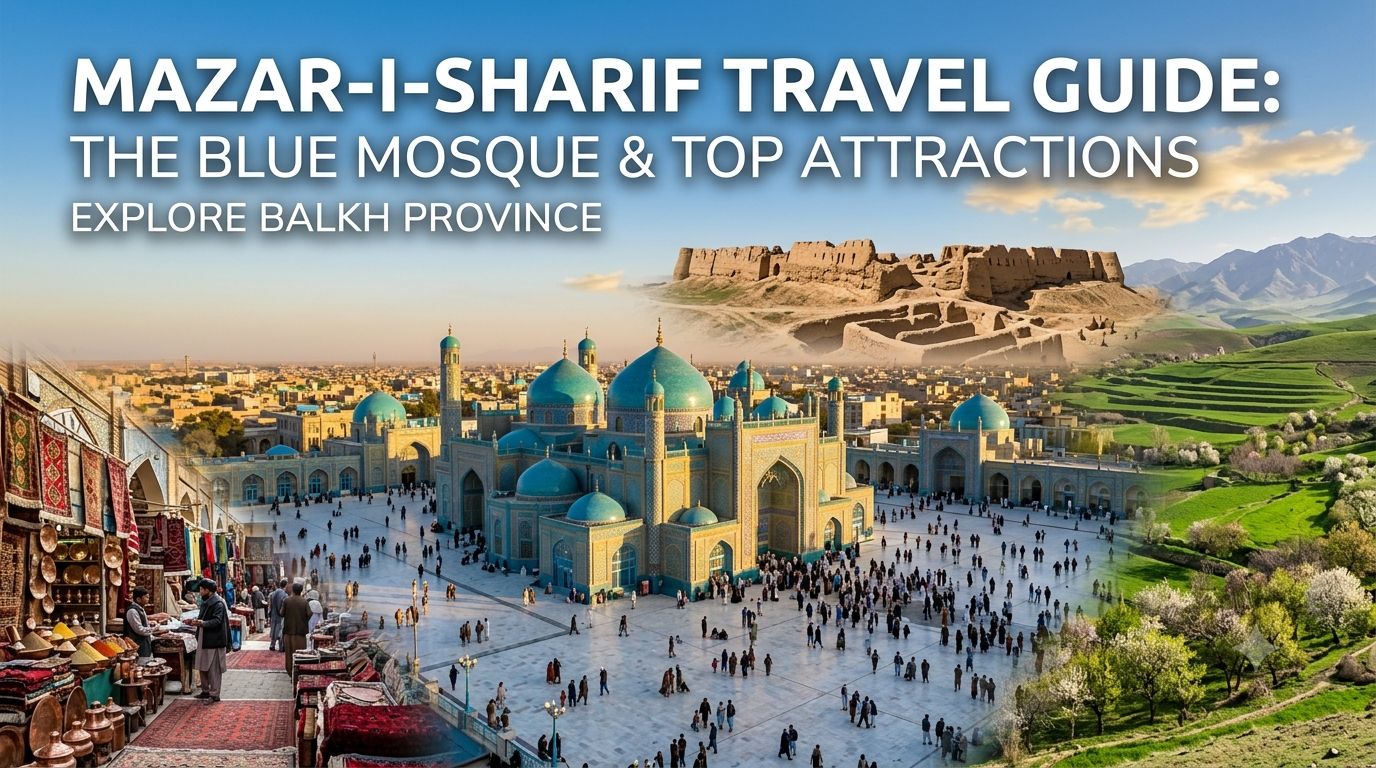
Known locally as the Rawza-e-Sharif (Holy Shrine), this stunning complex has attracted pilgrims, scholars, traders, and travelers for centuries. Covered in brilliant blue and turquoise tiles, the mosque stands at the heart of the city and remains one of Afghanistan’s most photographed landmarks.
Yet Mazar-i-Sharif is much more than its famous mosque.
The city serves as the cultural and commercial center of northern Afghanistan, offering visitors lively bazaars, traditional Afghan cuisine, welcoming hospitality, and easy access to the ancient city of Balkh—one of the oldest continuously inhabited settlements in the world.
Whether you are planning a cultural journey, a historical expedition, or simply wish to experience authentic Afghan hospitality, Mazar-i-Sharif provides an unforgettable introduction to northern Afghanistan.
This guide covers everything you need to know, from the history of the Blue Mosque to practical travel advice, nearby attractions, and local insights that help you experience the city with confidence and respect.
Mazar-i-Sharif is one of Afghanistan’s most important cultural and religious destinations. Its centerpiece, the Blue Mosque (Rawza-e-Sharif), is renowned for its dazzling blue tilework and spiritual significance. Beyond the mosque, visitors can explore the ancient city of Balkh, vibrant local markets, scenic countryside, traditional restaurants, and seasonal cultural celebrations. Most travelers spend one to three days discovering the city’s rich history, architecture, and warm hospitality.
Mazar-i-Sharif offers a unique combination of history, spirituality, architecture, and everyday Afghan life that few destinations can match.
Unlike many historic sites that function primarily as museums, the Blue Mosque remains a living place of worship. Every day, local residents gather for prayer while pilgrims from across Afghanistan visit the shrine. Travelers are able to witness this living heritage while respectfully observing local customs.
The city also serves as the gateway to Balkh Province, making it an excellent base for exploring some of Afghanistan’s oldest archaeological sites, peaceful rural landscapes, and cultural landmarks.
Many visitors are surprised by Mazar-i-Sharif’s broad avenues, well-organized city center, spacious parks, and relaxed atmosphere. Compared with many other Afghan cities, it has a distinctive character shaped by centuries of trade along the Silk Road.
Highlights of Visiting Mazar-i-Sharif
· Admire one of the finest examples of Islamic architecture in Central Asia.
· Visit the world-famous Blue Mosque.
· Experience authentic Afghan hospitality.
· Explore one of the oldest historical regions on Earth.
· Enjoy traditional northern Afghan cuisine.
· Shop in colorful local bazaars.
· Attend the famous Nawroz celebrations if visiting in spring.
· Discover the history of ancient Balkh nearby.
The Blue Mosque: The Heart of Mazar-i-Sharif
Standing proudly in the center of the city, the Blue Mosque is the symbol of Mazar-i-Sharif and one of Afghanistan’s greatest architectural treasures.
Officially known as the Shrine of Hazrat Ali or Rawza-e-Sharif, the complex features elegant domes, soaring minarets, intricate mosaics, marble courtyards, and thousands of hand-crafted blue tiles that shimmer under the northern Afghan sun.
The peaceful gardens surrounding the mosque create a welcoming atmosphere where families, worshippers, and visitors gather throughout the day.
White doves often circle the shrine, adding to the tranquil setting and making the mosque one of Afghanistan’s most recognizable landmarks.
For photographers, the changing light throughout the day transforms the brilliant tilework, making sunrise and late afternoon particularly rewarding times to visit.
History of the Blue Mosque
The exact origins of the Blue Mosque remain intertwined with history, faith, and tradition.
According to local tradition, the shrine marks the resting place of Hazrat Ali ibn Abi Talib, the cousin and son-in-law of the Prophet Muhammad. While most Muslims believe Hazrat Ali is buried in Najaf, Iraq, the tradition associated with Mazar-i-Sharif has existed for many centuries and has made the shrine one of Afghanistan’s most important pilgrimage destinations.
The present-day mosque dates primarily to the fifteenth century, when the Timurid rulers sponsored major construction and artistic decoration. Over the centuries, successive Afghan rulers restored and expanded the complex while preserving its distinctive architectural style.
Today, regardless of differing historical views regarding the burial site, the Blue Mosque is universally recognized as one of Afghanistan’s most significant religious, cultural, and architectural monuments.
Visitors are encouraged to appreciate both its historical importance and its continuing role as an active place of worship.
Architecture and Cultural Significance
The Blue Mosque is celebrated for its breathtaking craftsmanship.
Its walls are decorated with thousands of glazed ceramic tiles arranged in intricate geometric and floral designs. Delicate Arabic calligraphy, elegant archways, soaring iwans, and beautifully proportioned domes showcase the extraordinary skill of Afghan and Central Asian artisans.
Inside the complex, visitors will find spacious courtyards, landscaped gardens, fountains, shaded walkways, and prayer halls that create a calm and reflective environment.
Beyond its beauty, the mosque remains an important symbol of Afghan identity. It has long served as a gathering place for religious celebrations, community events, and one of the country’s most famous annual traditions—the Jahenda Bala, the ceremonial raising of a sacred banner during Nawroz.
For many Afghans, the Blue Mosque represents not only faith but also national heritage, artistic excellence, and centuries of cultural continuity.
Its enduring presence has made it one of the country’s most iconic landmarks and an essential destination for anyone seeking to understand Afghanistan’s rich history and diverse cultural traditions.
Mazar-i-Sharif: The Blue Mosque and Beyond
Everything Travelers Need to Know
Planning your visit in advance will help you make the most of your time in Mazar-i-Sharif. As one of Afghanistan’s most welcoming and culturally significant cities, it offers a rewarding experience for travelers who understand local customs and prepare accordingly.
Quick Facts
Province: Balkh Province
Elevation: Approximately 377 meters (1,236 feet) above sea level
Main Attraction: The Blue Mosque (Rawza-e-Sharif)
Recommended Length of Stay: Two to three days
Best Time to Visit: Spring (March to May) and autumn (September to November)
Currency: Afghan Afghani (AFN)
Languages: Dari is the primary language, while Pashto, Uzbek, Turkmen, and limited English are also spoken by some residents.
Time Zone: Afghanistan Time (UTC +4:30)
Best Time to Visit Mazar-i-Sharif
Mazar-i-Sharif welcomes visitors throughout the year, but each season offers a different experience.
Spring (March to May)
Spring is considered the best time to visit. Temperatures are comfortable, gardens become lush and colorful, and the city hosts some of Afghanistan’s most important cultural celebrations.
The highlight of the season is Nawroz (Persian New Year). During this period, thousands of pilgrims and visitors gather at the Blue Mosque for the famous Jahenda Bala, the ceremonial raising of the sacred banner. The atmosphere is festive, making spring the perfect season for travelers interested in Afghan traditions and culture.
Spring is ideal for:
· Walking tours
· Photography
· Cultural festivals
· Outdoor sightseeing
· Day trips around Balkh Province
Summer (June to August)
Summers are hot, dry, and sunny. Afternoon temperatures often rise above 40 °C (104 °F).
If you travel during summer, it is best to begin sightseeing early in the morning and take a break during the hottest part of the afternoon. Carry plenty of drinking water and wear light, breathable clothing.
Summer is suitable for:
· Early morning sightseeing
· Evening walks
· Visiting indoor attractions during the hottest hours
Autumn (September to November)
Autumn brings cooler temperatures, clear skies, and pleasant weather, making it another excellent season for exploring Mazar-i-Sharif.
The city is generally quieter than during the Nawroz celebrations, allowing visitors to enjoy historical sites and markets at a more relaxed pace.
Autumn is ideal for:
· Historical sightseeing
· Photography
· Cultural exploration
· Walking around the city
Winter (December to February)
Winter is cool, with cold mornings and evenings. Rain is possible, and some years may bring light snowfall.
Although winter sees fewer visitors, the Blue Mosque remains impressive, especially under clear blue skies. Travelers visiting during this season should bring warm clothing for early mornings and nights.
Opening Hours
The Blue Mosque is an active religious shrine rather than a traditional tourist attraction.
Visitors are generally welcome during daylight hours; however, access to certain areas may be restricted during daily prayers, Friday congregational prayers, religious ceremonies, or special events. Additionally, while non-Muslims are not permitted inside the main shrine compound, they are welcome to tour the remainder of the Blue Mosque complex.
Because schedules may change during Islamic holidays, it is advisable to confirm local arrangements before your visit.
Morning and late afternoon are usually the most comfortable times for sightseeing and photography.
Entrance Fees
Foreigners can generally enter the Blue Mosque complex with a ticket that cost about 350afn.
Donations toward the maintenance of the shrine may be accepted but are entirely voluntary.
As entrance policies can change, visitors should verify the latest information before traveling.
Dress Code
The Blue Mosque is one of Afghanistan’s most important religious sites. Dressing modestly demonstrates respect for local traditions and helps visitors feel more comfortable during their visit.
For Men
Men should wear:
· Long trousers
· Shirts that cover the shoulders
For Women
Women should wear:
· Loose-fitting clothing
· Long trousers or a long skirt
· Clothing that covers the arms when practical
· A headscarf covering the hair before entering the mosque complex
Many female travelers also choose to wear clothing with neutral colors out of respect for the religious setting.
Photography Guidelines
The Blue Mosque is one of Afghanistan’s most photographed landmarks, and photography is generally permitted in outdoor areas of the complex.
Visitors should always photograph respectfully.
Good practices include:
· Ask permission before photographing local people.
· Never disturb worshippers during prayer.
· Respect any restricted areas.
· Follow instructions from mosque staff or local authorities.
· Avoid flying drones unless you have received all required permissions from the relevant authorities.
Showing courtesy while taking photographs helps preserve the peaceful atmosphere of the shrine.
Visitor Facilities
The area surrounding the Blue Mosque is well developed and offers many services for travelers.
Within walking distance, visitors can usually find:
· Traditional Afghan restaurants
· Tea houses
· Cafés
· Grocery stores
· Pharmacies
· Banks
· Currency exchange services
· Hotels and guesthouses
· Taxi stands
· Public parks
Public restrooms are generally available within or close to the mosque complex, although availability may vary.
Accessibility
Most of the mosque’s courtyards are spacious and relatively flat, making them easy to explore on foot.
Travelers requiring additional assistance may find it helpful to arrange support through a local guide or tour operator.
How to Get to Mazar-i-Sharif
As the largest city in northern Afghanistan, Mazar-i-Sharif serves as a major transportation hub and can be reached by air or road.
By Air
Mazar-i-Sharif International Airport is located about 10 kilometers (6 miles) east of the city center.
Domestic flights periodically connect the city with Kabul and other major Afghan destinations, although schedules can change.
International charter or special flights may also operate depending on current aviation arrangements.
Travelers should always confirm flight schedules before making travel plans.
By Road
Several highways connect Mazar-i-Sharif with other parts of Afghanistan.
Approximate driving times are:
· Kabul: 7 to 9 hours
· Samangan: About 2 hours
· Pul-e-Khumri: 4 to 5 hours
· Sheberghan: Around 2 hours
· Hairatan Border: Approximately 1 hour
Actual travel times depend on road conditions, weather, checkpoints, and traffic.
Arriving Through the Hairatan Border
The Hairatan border crossing with Uzbekistan is one of Afghanistan’s main international entry points.
Foreign travelers arriving overland should carry:
· A valid passport
· A valid Afghan visa or approved e-Visa (where eligible)
· Printed copies of important travel documents
· Any additional paperwork required by Afghan authorities
Border procedures may change, so it is advisable to confirm current requirements before departure.
Getting Around the City
Most of Mazar-i-Sharif’s main attractions are located within a relatively compact area.
Visitors commonly travel using:
· Licensed taxis
· Private drivers
· Guided tour vehicles
· Walking, particularly around the city center
For travelers planning to visit attractions outside the city, such as the ancient city of Balkh or Charkent Valley, hiring an experienced local guide is highly recommended.
How Much Time Should You Spend?
The ideal length of your stay depends on your travel plans.
Half-Day Visit
A half-day is enough to visit the Blue Mosque, stroll through its gardens, browse nearby markets, and enjoy a traditional Afghan meal.
One Full Day
With a full day, you can explore the Blue Mosque, walk through the surrounding neighborhoods, visit local bazaars, relax in a traditional tea house, and experience the city’s atmosphere from morning until evening.
Two to Three Days
A stay of two or three days allows you to discover Mazar-i-Sharif at a comfortable pace while also taking excursions to nearby historical and natural attractions, sampling regional cuisine, meeting local people, and gaining a deeper appreciation of Balkh Province’s rich cultural heritage.
For most international visitors, spending at least two days provides the best balance between sightseeing, cultural experiences, and relaxation.
Beyond the Blue Mosque: More Places to Explore
Although the Blue Mosque is the city’s most famous landmark, Mazar-i-Sharif has much more to offer. From one of the world’s oldest cities to peaceful valleys, lively bazaars, and authentic Afghan cuisine, visitors who spend a little extra time here will gain a much deeper understanding of northern Afghanistan.
Whether your interests lie in history, culture, architecture, food, or photography, Mazar-i-Sharif serves as an excellent base for exploring Balkh Province.
Ancient Balkh – The Mother of Cities
Just 20 kilometers (12 miles) northwest of Mazar-i-Sharif lies the ancient city of Balkh, often called the “Mother of Cities.”
With a history stretching back more than 2,500 years—and possibly much earlier according to archaeological evidence—Balkh has been home to numerous civilizations. It was once an important center for trade, learning, and religion along the Silk Road.
Throughout its long history, Balkh has been associated with Zoroastrianism, Buddhism, Islam, and many great empires, including the Achaemenids, Greeks, Kushans, Arabs, Timurids, and Mughals.
Walking through Balkh today offers a rare opportunity to experience layers of history that few places in the world can match.
Some of the city’s ancient walls, gateways, and archaeological remains still stand, reminding visitors of its remarkable past.
Many historians consider Balkh one of the oldest continuously inhabited regions on Earth.
Highlights of Ancient Balkh
Visitors exploring Balkh should not miss:
· The ancient city walls
· Historic gates
· Archaeological remains scattered throughout the old city
· Traditional neighborhoods
· Local shrines and historic mosques
· Peaceful streets that preserve the atmosphere of old Afghanistan
Unlike heavily restored historical sites elsewhere, Balkh retains much of its authentic character, making it especially rewarding for travelers interested in archaeology and history.
Charkent Valley
Located northwest of Mazar-i-Sharif, Charkent Valley offers a refreshing contrast to the city’s busy streets.
Known for its rolling hills, orchards, mountain scenery, and traditional villages, the valley is one of the most beautiful natural destinations in Balkh Province.
During spring, the landscape becomes particularly attractive as fruit trees bloom and the surrounding countryside turns green.
Many local families visit Charkent for picnics, while photographers appreciate its scenic viewpoints and peaceful atmosphere.
The drive itself offers beautiful views of rural northern Afghanistan.
Local Bazaars
No visit to Mazar-i-Sharif is complete without exploring its bustling traditional markets.
The city’s bazaars provide an excellent opportunity to experience everyday Afghan life while supporting local businesses.
Visitors can browse shops selling:
· Handmade carpets
· Traditional embroidery
· Jewelry
· Afghan clothing
· Dried fruits
· Nuts
· Spices
· Copperware
· Pottery
· Prayer beads
· Local handicrafts
· Fresh seasonal produce
Even if you are not shopping, simply wandering through the markets allows you to observe the rhythm of daily life and interact with friendly local shopkeepers.
Bargaining is common in many traditional markets, but negotiations should always be polite and respectful.
Taste Northern Afghan Cuisine
Northern Afghanistan is famous for its rich flavors and generous hospitality.
Mazar-i-Sharif is one of the country’s best places to discover authentic Afghan cuisine.
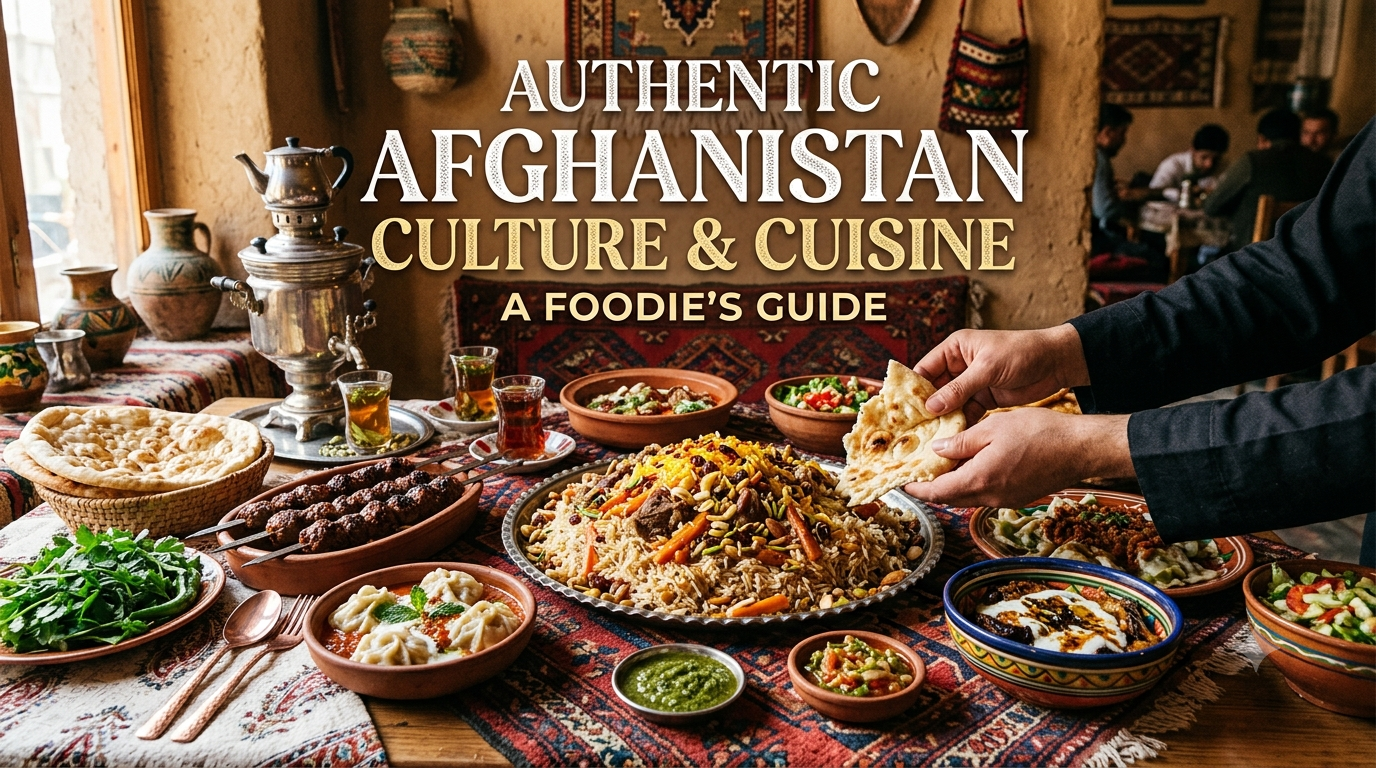
Popular local dishes include:
Qabuli Palaw
Often regarded as Afghanistan’s national dish, Qabuli Palaw combines fragrant rice with tender lamb or beef, carrots, raisins, and carefully balanced spices.
Many travelers consider northern Afghanistan to serve some of the country’s finest versions of this classic meal.
Mantu
These steamed dumplings are filled with seasoned minced meat and onions before being topped with yogurt, tomato sauce, and dried mint.
They are one of Afghanistan’s most beloved traditional dishes.
Ashak
Ashak consists of delicate dumplings filled primarily with leeks or scallions.
They are served with yogurt, tomato sauce, and sometimes minced meat, creating a delicious balance of flavors.
Kebabs
Freshly grilled lamb and beef kebabs are widely available throughout the city.
They are typically served with naan, fresh herbs, grilled vegetables, and green tea.
Bolani
Bolani is a thin stuffed flatbread filled with potatoes, pumpkin, spinach, or lentils.
It makes an excellent light meal or afternoon snack.
Traditional Tea
Hospitality is deeply rooted in Afghan culture.
Visitors are often welcomed with green tea or black tea accompanied by dried fruits, almonds, pistachios, raisins, or sweets.
Accepting a cup of tea when offered is a simple way to experience local hospitality.
Parks and Public Spaces
Mazar-i-Sharif is known for its spacious parks and pleasant public areas.
The gardens surrounding the Blue Mosque are among the city’s most relaxing places to spend time.
Visitors often see:
· Families enjoying the gardens
· Children feeding the famous white doves
· Friends gathering for conversation
· Worshippers resting after prayers
· Local vendors selling refreshments nearby
The peaceful atmosphere makes these gardens an ideal place to slow down after a busy day of sightseeing.
Seasonal Experiences
Every season offers something different, but spring is especially memorable.
During Nawroz, Mazar-i-Sharif becomes one of Afghanistan’s liveliest destinations.
The city hosts:
· The Jahenda Bala ceremony
· Cultural celebrations
· Traditional music
· Family gatherings
· Festive markets
· Increased pilgrim activity
Visitors interested in Afghan traditions often consider this the most rewarding time of year to experience the city.
Hidden Local Experiences
While many visitors focus only on the Blue Mosque, spending more time in the city reveals experiences that are equally memorable.
Consider:
· Walking through older residential neighborhoods to admire traditional architecture.
· Visiting a local bakery early in the morning to watch fresh Afghan naan being baked in a clay oven.
· Enjoying sunset from one of the city’s quieter parks.
· Drinking tea in a traditional chaikhana (tea house) while chatting with local residents.
· Exploring neighborhood markets beyond the main tourist areas.
· Sampling locally produced sweets and seasonal fruits.
These simple experiences often become travelers’ favorite memories because they provide genuine insight into everyday life.
Nearby Attractions Worth Visiting
If you have extra time, several attractions around Mazar-i-Sharif deserve a place on your itinerary.
Ancient Balkh
One of the oldest cities in the world and an essential destination for history enthusiasts.
Charkent Valley
Perfect for travelers seeking mountain scenery, traditional villages, and peaceful countryside.
Local Handicraft Workshops
Several family-run workshops continue traditional crafts such as carpet weaving, embroidery, and metalwork.
Visitors may have the opportunity to observe artisans practicing skills that have been passed down through generations.
Why Spend More Than One Day?
Many travelers initially plan only a brief stop in Mazar-i-Sharif.
However, those who stay longer often discover that the city’s greatest attraction is not just the Blue Mosque but the combination of history, hospitality, culture, and everyday Afghan life.
A two- or three-day stay allows visitors to:
· Explore both Mazar-i-Sharif and Ancient Balkh without rushing.
· Experience authentic northern Afghan cuisine.
· Visit traditional markets.
· Meet local people.
· Enjoy scenic countryside around Charkent Valley.
· Learn about Afghanistan’s rich historical heritage.
· Appreciate the slower pace of life that makes the city so welcoming.
Rather than simply checking off a famous landmark, spending additional time here provides a deeper and more meaningful understanding of northern Afghanistan and its people.
Suggested Itineraries
Whether you have just a few hours or several days, Mazar-i-Sharif offers enough history, culture, and local experiences to fill your itinerary.
───
Half-Day Itinerary
If you’re short on time, focus on the city’s most iconic attraction.
Morning
· Visit the Blue Mosque.
· Walk through the peaceful gardens surrounding the shrine.
· Observe the beautiful tilework and architecture.
Lunch
· Enjoy traditional Afghan cuisine at a local restaurant.
Afternoon
· Explore the nearby bazaars.
· Relax with a cup of Afghan green tea before continuing your journey.
One-Day Itinerary
A full day allows you to experience both the city’s famous landmarks and everyday local life.
Morning
· Visit the Blue Mosque early to avoid the midday heat.
· Spend time exploring the mosque’s courtyards and gardens.
Late Morning
· Walk through the surrounding neighborhoods.
· Visit nearby markets and handicraft shops.
Lunch
· Try Qabuli Palaw or freshly grilled kebabs at a traditional restaurant.
Afternoon
· Visit the ancient city of Balkh.
· Explore its historic walls and archaeological sites.
Evening
· Return to Mazar-i-Sharif.
· Enjoy tea at a traditional chaikhana before dinner.
Two-Day Itinerary
Day One
· Blue Mosque
· Local bazaars
· Traditional Afghan lunch
· Historic neighborhoods
· Tea house experience
Day Two
· Full excursion to Ancient Balkh
· Visit historical landmarks and shrines
· Continue to Charkent Valley if time allows
· Return to Mazar-i-Sharif for dinner
Three-Day Itinerary
A three-day visit offers the most rewarding experience.
Spend your first day exploring the Blue Mosque and the city center.
Dedicate your second day to Ancient Balkh and its remarkable historical heritage.
Use your third day to discover Charkent Valley, enjoy local cuisine, shop for handicrafts, and experience daily life beyond the main tourist attractions.
Practical Travel Tips
What to Pack
Pack lightweight clothing during summer and warmer layers if visiting in winter.
Bring:
· Comfortable walking shoes
· Sunscreen
· Sunglasses
· A reusable water bottle
· A power bank
· Personal medications
· A small first-aid kit
· A scarf or shawl for visiting religious sites
Money
Afghanistan is primarily a cash-based country.
Carry sufficient Afghan Afghanis (AFN) for daily expenses.
While some hotels may accept foreign currencies under certain circumstances, everyday purchases in markets, restaurants, taxis, and small businesses are almost always made in Afghanis.
Clean, newer US Dollar and Euro banknotes are generally the easiest foreign currencies to exchange.
Higher denomination banknotes may receive a better exchange rate.
Internet and SIM Cards
Mobile coverage in Mazar-i-Sharif is generally good.
Visitors can purchase local SIM cards from major Afghan mobile operators after completing any required registration procedures.
Internet speeds vary depending on the provider and location.
Downloading offline maps before traveling is highly recommended.
Food and Drinking Water
Mazar-i-Sharif offers a wide variety of freshly prepared meals.
Choose restaurants with good hygiene standards and food that is cooked fresh.
Drink bottled or properly filtered water rather than untreated tap water.
Local Etiquette
Afghans are widely known for their hospitality.
Simple gestures of respect leave a positive impression.
Remember to:
· Dress modestly.
· Remove shoes where requested.
· Greet people politely.
· Accept tea if offered when appropriate.
· Ask permission before taking photographs of individuals.
· Respect prayer times and religious customs.
Photography Tips
The Blue Mosque is especially beautiful during the early morning and late afternoon when soft sunlight highlights the intricate blue tilework.
Photographers should always remain respectful of worshippers and avoid disrupting religious activities.
Safety Information
Travel conditions in Afghanistan can change.
Before visiting Mazar-i-Sharif, travelers should:
· Monitor official travel advisories issued by their government.
· Stay informed about local conditions.
· Carry identification documents at all times.
· Follow instructions from local authorities.
· Respect security checkpoints.
· Avoid restricted or clearly marked government and military areas.
Visitors planning to travel outside Mazar-i-Sharif should verify current road conditions before departure, as travel procedures and security measures may change.
Using an experienced local guide or reputable tour operator can make travel logistics easier while helping visitors better understand local customs and regulations.
Responsible Tourism
Responsible travel helps preserve Afghanistan’s cultural heritage while supporting local communities.
Visitors are encouraged to:
· Support locally owned businesses.
· Purchase authentic handmade products.
· Respect religious customs.
· Dispose of waste responsibly.
· Avoid damaging historical monuments.
· Ask permission before photographing people.
· Learn a few greetings in Dari or Pashto.
· Be patient, polite, and culturally respectful.
Small acts of courtesy contribute to positive experiences for both visitors and local communities.
Frequently Asked Questions
Is Mazar-i-Sharif worth visiting?
Yes. Mazar-i-Sharif is one of Afghanistan’s most rewarding destinations thanks to its famous Blue Mosque, rich history, welcoming atmosphere, and easy access to Ancient Balkh.
Why is the Blue Mosque famous?
The Blue Mosque is celebrated for its magnificent blue tilework, beautiful Islamic architecture, and its importance as one of Afghanistan’s most significant religious and cultural landmarks.
How many days should I spend in Mazar-i-Sharif?
Most travelers find that two to three days provide enough time to explore the city, visit Ancient Balkh, and experience local culture at a relaxed pace.
Can foreigners visit the Blue Mosque?
Yes. Foreign visitors are generally welcome, provided they dress modestly, behave respectfully, and follow any instructions given by mosque staff or local authorities.
What is the best season to visit?
Spring and autumn usually offer the most pleasant weather for sightseeing, walking tours, and photography.
Is Mazar-i-Sharif suitable for independent travelers?
Independent travel is possible, but visitors should carefully research current travel conditions and consider hiring an experienced local guide, particularly for excursions outside the city.
What language is spoken in Mazar-i-Sharif?
Dari is the primary language. Pashto, Uzbek, and Turkmen are also spoken, while some tourism professionals have a working knowledge of English.
What food should I try?
Popular local dishes include Qabuli Palaw, mantu, ashak, kebabs, bolani, fresh naan, and traditional Afghan tea.
Can I use credit or debit cards?
Card payments are generally not accepted for everyday purchases. Travelers should plan to use cash for almost all expenses.
Is Mazar-i-Sharif family-friendly?
Yes. Families often enjoy the gardens surrounding the Blue Mosque, local parks, traditional markets, and the city’s relaxed atmosphere.
Key Takeaways
· Mazar-i-Sharif is one of Afghanistan’s most important cultural and historical destinations.
· The Blue Mosque is the city’s most iconic attraction and an architectural masterpiece.
· Ancient Balkh is one of the world’s oldest historic cities and should not be missed.
· Charkent Valley offers beautiful scenery beyond the city.
· Spending two to three days provides the best overall experience.
· Respect for local customs and traditions will greatly enhance your visit.
· Hiring knowledgeable local guides can enrich your understanding of the region while simplifying travel logistics.
Final Thoughts
Mazar-i-Sharif is much more than the home of Afghanistan’s famous Blue Mosque. It is a city where centuries of history, faith, trade, and culture continue to shape everyday life.
From the shimmering blue tiles of Rawza-e-Sharif to the ancient streets of Balkh, from welcoming tea houses to colorful bazaars, every corner of the city tells a story about Afghanistan’s remarkable heritage.
Visitors who take the time to look beyond the main attractions are often rewarded with genuine hospitality, fascinating conversations, unforgettable meals, and a deeper appreciation for one of Central Asia’s oldest cultural landscapes.
If you’re planning a journey through northern Afghanistan, Afghanistan On Tour can assist with customized itineraries, experienced local guides, transportation, visa guidance, travel permits where required, and logistical support to help you explore Mazar-i-Sharif and Balkh Province with confidence.